
Hiring doesn’t end when a candidate accepts the offer. For most organisations in Australia, that’s just when the real work begins – that’s also when onboarding software is most relevant.
Handled well, onboarding gives new starters a clear and consistent path into the business. Handled poorly, it creates employment risks that span the worker lifecycle.
From contract coordination, policy acknowledgements, and right-to-work checks to payroll setup, training allocation, and internal task assignments, organisations can no longer rely solely on fragmented manual processes.
Spreadsheets, lengthy email chains, and ad hoc systems may still be the norm. But they rarely offer the structure, visibility, or control today’s workforce demands, specifically:
- A consistent onboarding process (far too many details fall through the cracks)
- Full visibility & control over the onboarding progress
- Efficient storage with centralised documentation (key for a defensible audit trail)
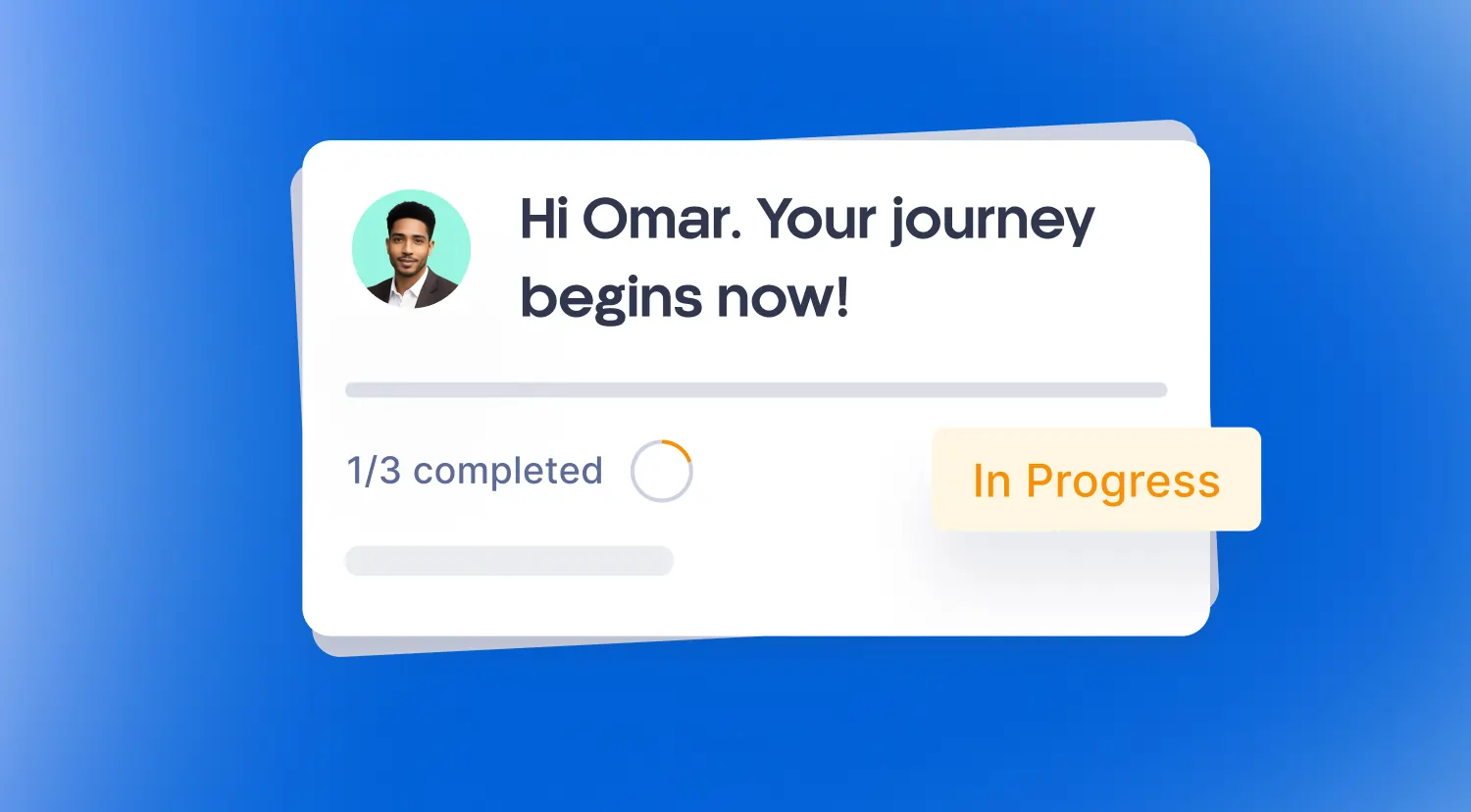
Employee onboarding software effectively provides a structured way to manage these challenges. As a modern solution, it helps HR, payroll, and operational teams track what’s been completed, what’s outstanding, and whether a new starter is truly ready to begin work.
The following guide explains what onboarding software is, its value in workforce management, and how leading onboarding software in Australia stacks up against one another.
The biggest problems onboarding software solves
Before exploring how employee onboarding systems function, it’s useful to understand the primary operational challenges they address.
Across the vast majority of organisations, software is generally introduced to combat:
- Manual administrative burden
Chasing forms, collecting bank and tax details, issuing contracts, and updating multiple systems consumes significant HR time (particularly during high-volume hiring periods). Teams end up spending too much time coordinating onboarding, rather than helping new starters get job-ready. - Inconsistent onboarding visibility and processes
Without a standardised workflow, onboarding experiences can vary between managers, locations, or departments. This can lead to missed steps, incomplete data, and uneven employee experiences. - Fragmented compliance and documentation
Employment records, policies, and credentials are often stored across multiple systems and formats. This makes it harder to maintain accuracy, track completions, and prepare for audits. It can also create downstream payroll and regulatory risk.
These three issues form the foundation of most employee onboarding software use cases in Australia, where businesses operate under strict employment and record-keeping expectations.
Related: Healthy Payroll Begins With Healthy Onboarding
Onboarding software explained
Onboarding software refers to any digital system that governs the end-to-end process of welcoming and setting up new employees, both administratively and operationally, and to a certain extent culturally.
Most onboarding platforms replace manual, fragmented workflows and physical paperwork with automation and standardised procedures. This lowers the chance of critical onboarding steps, including compliance obligations being missed between offer acceptance and day one.
At its core, good employee onboarding software should support:
- Employment contract generation & execution
- Policy distribution with acknowledgement tracking
- Collection of right-to-work & compliance documentation
- Training allocation & induction workflows
- Employee record creation and payroll setup
In practice, onboarding software helps solve these problems outlined above by bringing admin, visibility, and compliance into a structured workflow:
- Automated admin
Instead of chasing documents, managing spreadsheets, and coordinating via email, onboarding software consolidates core tasks such as contracts, policy distribution, and employee data collection. This reduces duplication, speeds up setup, and gives teams more reliable processes to follow. - Standard procedures and process transparency
Where manual onboarding can vary by manager, location, or role, onboarding software enforces consistent workflows. Role-based templates can guide every new starter through the correct steps, helping prevent missed tasks (and giving HR teams clearer visibility over progress). - Centralised compliance and documentation
Rather than storing employment documents across multiple systems, onboarding software keeps records in a central employee profile. It can track acknowledgements, capture time-stamped actions, and integrate with payroll and HR systems to improve data accuracy, audit readiness, as well as compliance visibility.
Why onboarding software matters in Australia
.webp)
For employers in Australia, onboarding isn’t just an administrative exercise. It’s where employment records, worker details, and compliance requirements are first established.
Poor onboarding can contribute to operational and compliance risks under the Fair Work framework – even when issues are unintentional. Common pitfalls include:
- Missing or incomplete employment documentation
- Unclear expectations around role responsibilities
- Missing or inconsistent policy acknowledgement
- Limited early-stage performance outlook/visibility
- Gaps in eligibility or compliance records
- Payroll errors or downstream issues
- Lack of audit trails for employment decisions
These issues might not surface immediately, but they can compound over time and create audit scrutiny, disputes, payroll reconciliations, along with other avoidable problems.
For this reason, employee onboarding software adoption is increasingly driven by compliance visibility and standardisation. Not just the promise of “efficiency.”
At an operational level, onboarding software helps organisations create clarity and process discipline through infrastructure that connects to the broader workforce management picture – from record-keeping and payroll to ongoing compliance and offboarding.
Onboarding in specialised workforces
Sectors with higher compliance or volume requirements – such as healthcare, NDIS / disability & community services, security services, and labour hire – often require:
- Worker screening & background checks
- Role-specific training & certifications
- Licence & credential verification
- Expiry tracking for compliance documents
- Site- or client-specific onboarding requirements
When managed manually, these requirements can become difficult to track consistently, especially across multiple sites, clients or employment types.
Configurable onboarding software in Australia helps embed these requirements into structured workflows, reducing reliance on manual tracking and informal coordination.
How to choose onboarding software (what does “good” look like?)
The right onboarding software for your organisation will invariably depend on workforce structure, sector compliance obligations, and system integration needs.
Top considerations are as follows:
- Whether workflows can be customised by role, location, or employment type
- Whether employee documents and contracts storage is centralised
- Support for compliance checks & acknowledgements
- How onboarding data flows into payroll & HR systems
- Visibility of onboarding progress for managers & HR teams
- Ease of use for administrators & employees
- Compatibility with wider HR, payroll, & workforce systems
For Australian organisations, it’s also important to consider whether the system supports local employment requirements, audit readiness, and accurate worker records.
Beyond administrative control, onboarding software also shapes the early employee experience. A well-structured onboarding process should help new starters:
- Understand role expectations earlier
- Complete required tasks before day one
- Reduce administrative friction during onboarding
- Receive consistent communication across teams
- Experience a more predictable onboarding journey
In essence, employee onboarding software reduces variability by standardising how information is collected, delivered, acknowledged and stored.
The Best Onboarding Software in Australia
.webp)
Xemplo
Best for Australian businesses that need a clear, consistent way to manage onboarding across different roles, locations, employment types, or client sites.
Xemplo connects onboarding to the broader workforce lifecycle – helping businesses move from signed offer to compliant, payroll-ready worker record.
The platform helps teams manage contracts, worker documents, policies, training, compliance checks, and onboarding tasks within a single ecosystem (rather than relying on a patchwork of spreadsheets or follow-up emails).
As an Australian-made onboarding software, Xemplo is particularly useful for organisations with recurring onboarding requirements across regulated, distributed or high-volume workforces. HR, payroll, and operations teams can see what has been completed, what’s still outstanding, and where action is required before a worker starts.
Head to the link here to find out more.
BambooHR
Best for small to mid-sized businesses looking for simple HR onboarding and employee document management.
BambooHR is one of the more widely recognised HR platforms for onboarding among small to mid-sized organisations, with consistently strong user ratings on Capterra for usability and ease of setup.
Its onboarding module supports digital document collection, automated task lists, and self-service onboarding journeys that reduce HR administrative overhead. Users frequently highlight its intuitive interface and painless implementation.
However, review sources also note limitations around more advanced recruiting and workflow complexity; some users report that it’s better suited to smaller organisations or those with straightforward HR requirements.
Key strengths:
- Clean, easy-to-use onboarding workflows
- Strong document management, e-signature capabilities
- High user satisfaction for ease of use
Considerations:
- Can feel limited for complex enterprise HR requirements
- Certain users outgrow onboarding depth as organisations scale
HiBob
Best for growing businesses that want configurable onboarding connected to broader employee experience workflows.
HiBob is a modern HR platform that combines onboarding with broader employee experience management – it’s also consistently rated highly on Capterra for onboarding usability and configurability.
Its onboarding workflows are designed to begin pre-boarding, enabling HR, IT, and managers to coordinate tasks before a new hire’s first day. Reviews highlight its strong customisation options and structured workflow automation.
Users do note, however, that setup can take some time due to its configurability. But this flexibility is often seen as a strength for scaling organisations.
Key strengths:
- Highly customisable onboarding workflows
- Strong pre-boarding, cross-team task automation
- Nice balance of HR, IT, manager coordination
Considerations:
- Requires upfront configuration to unlock full value
- Probably more feature-rich than necessary for smaller teams
Rippling
Best for businesses that want onboarding connected across HR, IT, and payroll.
Rippling is frequently positioned as an onboarding and workforce platform on Capterra, particularly due to its automation depth and high overall user satisfaction scores.
Its onboarding capabilities span HR, IT, and payroll, enabling organisations to provision devices, system access, as well as payroll setup alongside standard HR onboarding tasks. This makes it especially relevant for distributed or hybrid workforces.
Capterra feedback highlights its strong automation and integration capabilities, while some users note that its breadth can make it more complex than pure onboarding-only tools.
Key strengths:
End-to-end onboarding automation across HR, IT, payroll.
- Strong integration, workflow orchestration
- High user ratings for features & usability
Considerations:
- Broader platform scope may be more than required for simple onboarding
- Setup can be more involved than lightweight HR tools
Workday HCM
Best for large enterprises with complex HR, payroll, and workforce reporting needs.
Workday HCM is an enterprise-grade HR platform that includes onboarding as part of its wider human capital management suite. On Capterra, it’s generally positioned as a strong enterprise solution with solid feature depth but more complex usability expectations.
Its onboarding functionality is tightly integrated with broader HR, payroll, and reporting systems – supporting structured workflows and compliance tracking at scale.
User feedback commonly cites its power and depth, alongside a learning curve that reflects its enterprise focus.
Key strengths:
- Highly structured enterprise onboarding workflows
- Strong integration with HR, payroll, analytics
- Suitable for large, complex organisations
Considerations:
- Steeper learning curve, longer implementation
- Less suitable for small or mid-sized teams
SAP SuccessFactors

Best for large or multinational organisations looking for standardised onboarding across complex workforce environments.
SAP SuccessFactors is a global HR suite featuring onboarding as part of its talent and employee lifecycle management capabilities. Capterra reviews typically position it as a robust enterprise solution with strong process standardisation.
Its onboarding module supports structured workflows, compliance documentation, and integration across large organisational environments, making it suitable for multinational businesses.
Feedback usually involves the software’s reliability at scale, balanced against complexity in configuration and administration.
Key strengths:
- Strong enterprise onboarding structure, compliance support
- Deep integration across HR & talent systems
- Designed for global workforce consistency
Considerations:
- Complex setup, administration requirements
- Not really suited to smaller organisations
Tanda
Best for shift-based businesses that want onboarding connected to rostering, time, and attendance workflows.
Tanda is primarily a workforce management and rostering platform, though like many solutions in this space, it includes onboarding functionality that supports employee setup, compliance forms, and award interpretation.
While not a dedicated onboarding system, it’s commonly leveraged in Australian hospitality, retail, and shift-based industries where onboarding is closely tied to scheduling and award compliance.
Tanda’s onboarding tools are practical and operational rather than strategic, focusing on getting employees job-ready to deploy quickly.
Key strengths:
- Fast employee setup aligned with rostering systems
- Strong suitability for shift-based industries
- Practical compliance & award interpretation support
Considerations:
- Limited onboarding depth compared with dedicated HR platforms
- Best used alongside broader HR systems
Employment Hero
Best for small to mid-sized Australian businesses looking for basic onboarding, HR, and payroll.
Employment Hero is a popular Australian HR platform that combines onboarding with payroll and employment management – often positioned as an all-in-one option for small to mid-sized businesses.
Its onboarding functionality ranges from digital contracts and e-signatures to automated employee setup workflows, reducing administrative burden for small and mid-sized businesses.
User feedback is generally positive around the consolidation of HR processes, although some reviews note that experience can vary depending on configuration, support requirements and the number of modules in use.
Key strengths:
- Integrated onboarding, payroll, HR management
- Digital contracts, e-signature workflows
- Widespread SMB adoption in Australia
Considerations:
- Feature breadth can introduce complexity for smaller teams
- Experience varies depending on module configuration
- Users report mixed experiences with customer support

_%20A%20Guide%20for%20Australian%20Employers.webp)

.webp)