

At some point, every serious organisation should ask itself one simple question:
How many times is the same employee information being entered, checked, or transferred?
And the answer reveals more than dormant inefficiencies.
Double data entry reveals a hidden “tax” you’re paying in administrative overhead – in these cases, businesses are essentially dedicating more resources than necessary towards the same labour, in service of the same outcomes, over and over again.
When HR, payroll, finance, and operational teams are forced to rely on disconnected systems, information captured during recruitment or onboarding must often be resubmitted elsewhere.
Subsequent handovers create admin, increase the potential surface area for errors, and result in wasted time (and manual effort) spent reconciling records that should already be aligned.
Now individually, these tasks may seem negligible. Across a growing workforce, however, all that repetitive checking/correcting/transferring of data points, along with continuous input validation, amounts to a significant resource drain.
The cost of disconnected processes
Each employee journey creates a “flow” of information.
A candidate becomes an employee. Employment details become payroll inputs. Compliance documentation determines workforce readiness. Changes to roles, locations, pay conditions, or credentials influence ongoing workforce management.
When this information is managed via multiple systems that cannot adequately communicate with one another, transitions only introduce additional manual burdens.
Data that’s already been captured needs to be transferred. Records that should already be aligned need to be reconciled. Teams find themselves responsible for maintaining links between platforms; rather than leveraging those very systems to up operational efficiency.
What you get is administrative effort that climbs alongside workforce growth:
- Greater workload for HR, payroll, & ops teams
- Greater risk of inconsistent or outdated employee information
- Delays in onboarding & workforce deployment
- Inordinate time spent correcting issues (instead of preventing them)
- Loss of confidence in workforce reporting & decision-making
For businesses managing complex workforces, these challenges become increasingly difficult to absorb as employee numbers, locations, and compliance requirements multiply.
The benefits of eliminating manual admin (in numbers)
The cost exacted by fragmented workforce processes isn’t theoretical. Organisations that successfully replace manual administration with connected digital solutions achieve measurable improvements.
Torbay Lifestyles & Care, for example, reduced onboarding admin time by a staggering 70% after replacing paper-based procedures with Xemplo.
Employee information, compliance documentation, and HR workflows were effectively centralised, allowing teams to access records faster and reducing manual effort in workforce management.
Other Xemplo customers have also notably experienced the following across the key pillars of onboarding, compliance, payroll, and invoicing:
- 30% reduction in invoice processing time
- 50% fewer compliance errors
- 56% reduction in payroll admin time
- 100% standardised employment documentation
Removing double data entry from the equation also unlocks (or more appropriately, returns) capacity for teams to support company growth.
HR teams can focus on retention, employee experience, and workforce planning.
Payroll teams are freed from their Sisyphean cycle of resolving discrepancies and managing avoidable exceptions.
Operational leaders gain clearer visibility into workforce trends, capability gaps, and compliance risks.
The issue isn’t that admin exists; it’s whether repetitive admin is consuming the time and resources needed to actually better the business.
How Xemplo optimises your workflows
Xemplo enables workforce information to flow more efficiently between onboarding, employment, compliance, and payroll procedures.
By capturing employee information through structured workflows from the beginning, and making it readily available within a consolidated ecosystem, our software reduces the need for teams to manually recreate, transfer, or reconcile the same data.
This helps organisations:
- Avoid data duplication (and enforce data accuracy)
- Strengthen visibility of HR, compliance, & payroll processes
- Reduce time spent correcting preventable errors
Capturing information once and carrying it throughout linked workflows essentially ensures consistency across the employee lifecycle, cuts down on administrative effort; and provides HR, payroll, as well as ops teams with unprecedented confidence in their “single source of truth.”
Information is therefore both complete and accurate.
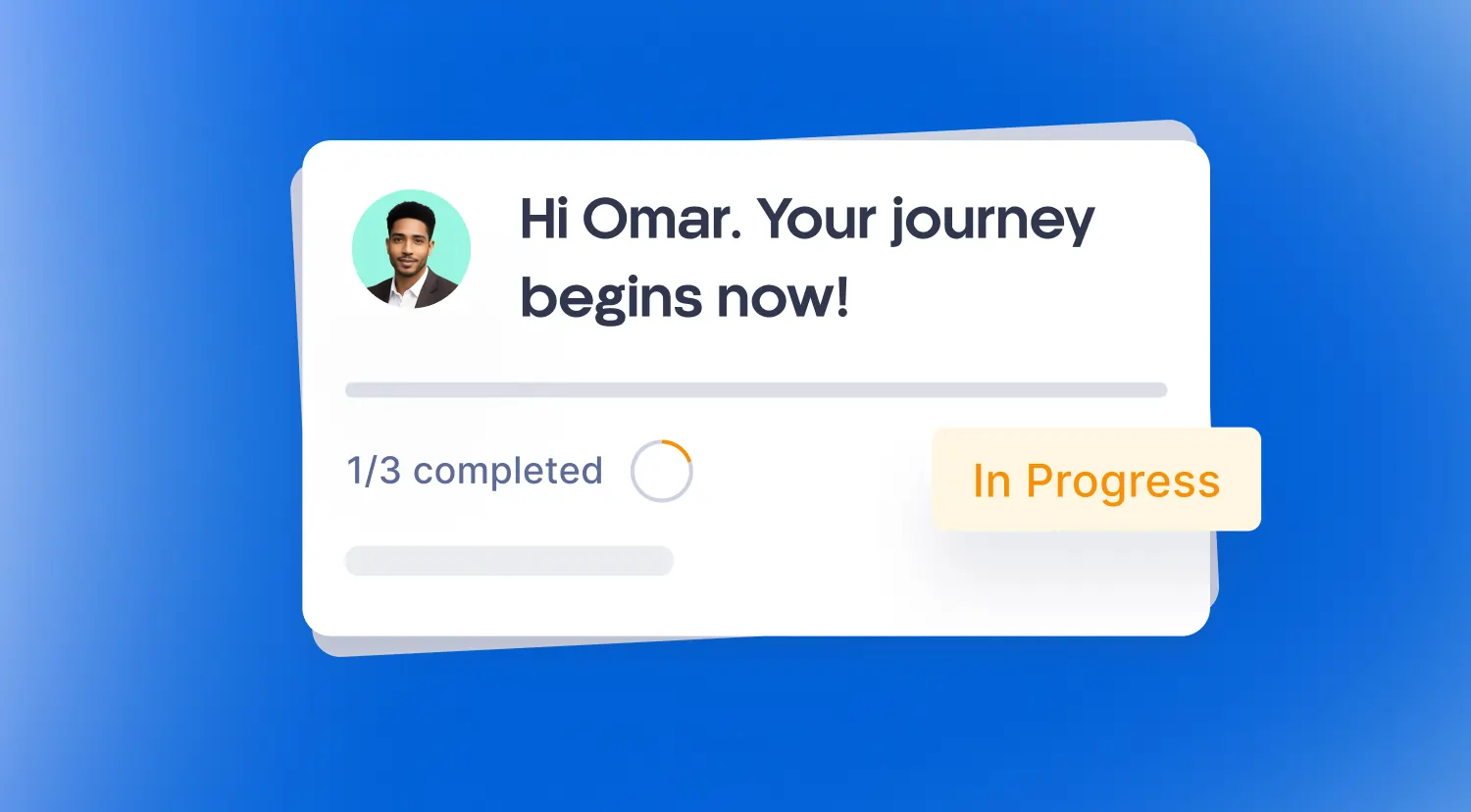
With Xemplo Onboard, employees can transition from offer acceptance to workforce readiness through a structured digital journey that entails employment documentation, policy acknowledgements, and compliance requirements (completion statuses, outstanding actions, and all).
Beyond onboarding, Xemplo supports ongoing workforce compliance by centralising credentials, training records, compliance activities, and other important employee oversight. Particularly valuable for regulated sectors where licences, qualifications, screening checks, and mandatory education must be upheld over time.
Workflow optimisation should be a top priority
Double data entry isn’t just a productivity speed bump. It’s usually a sign that workforce information isn’t moving the way it should between your people, processes, and platforms.
As a business scales, these manual methodologies place unnecessary pressure on HR, payroll, and operational teams.
The organisations best positioned for growth will be those with connected workflows in place that not only allow information to move efficiently, but also:
- Reduce repetitive administration
- Improve workforce data accuracy
- Strengthen compliance visibility
- Accelerate employee onboarding
- Support payroll readiness
- Provide clearer workforce insights
Time recovered from repetitive efforts can then be directed towards higher-value objectives.
Remember: optimising workforce workflows isn’t about eliminating every instance of admin, but ensuring you’re never retreading all-too-familiar ground.

.webp)