
We often talk about the gap between payroll and HR.
And by “closing the gap,” I mean reducing the amount of time payroll teams spend chasing, checking, correcting, and reworking information from multiple sources before a pay run.
But perhaps nothing emphasises the importance of closing the gap between payroll and HR more than the onboarding process – arguably the first opportunity in the employee lifecycle to create or reduce payroll risk.
It’s easy to assume that payroll quality is determined solely by the payroll system. In reality, it’s determined by the quality of the information and the processes that precede payroll.
In an era where payroll errors are no longer buffered by time or quarterly correction cadences with the likes of Payday Super – and outcomes are increasingly being judged on timing, visibility, as well as control – getting it right from the outset has become paramount.
Measure twice and cut once, as they say.
RELATED: Shadow Payroll Explained (What Global Employers Need To Know)
First impressions count for everything
We know that onboarding is critical for new employees.
According to industry research, up to 20% of employee turnover occurs within the first 45 days, due to feeling let down or underwhelmed by their onboarding.
Workers who encounter poor onboarding – i.e. inadequate induction, insufficient training, lack of access to IT infrastructure, even lack of role clarity – are also twice as likely to seek new opportunities within their first year; while successful onboarding has been shown to improve workforce retention by as much as 82% in an almost perfect inversion[BS1.1][GL1.2].
Payroll timeliness and accuracy are also a major part of the onboarding experience. Which is quite an issue, even before we delve into operational bottlenecks, obstacles, or compliance.
Respecting “Box 1”
An organisation’s payroll health hinges upon the integrity of what I refer to as “Box 1” (a catch-all term for the layer of workforce data that sits before payroll calculation).
To understand Box 1, you need to stop looking at payroll and start looking at the employee lifecycle holistically.
An employee is recruited, onboarded, and allocated a salary and cost centre. They apply for leave. Leave is approved. They work overtime. Overtime is approved. They’re promoted, move teams, change cost centres, elect/change benefits, update details, and eventually leave.
Each of these events can affect payroll. Yet none of them is initiated by payroll. And this is why payroll teams carry such a considerable burden. In my experience, Box 1 accounts for approximately 60% of payroll’s time, effort, and risk.
Thus, payroll itself exists at the end of a long chain of upstream activity that begins with onboarding. So when onboarding activity is fragmented, manual, inconsistent, or poorly governed, the problems never just disappear – they simply wash downstream.
Related: VEVO & Work Rights Checks in Australia (Employer’s Guide)
The non-negotiables of onboarding in Australia
During onboarding, key elements need to be captured upfront and passed through to payroll correctly.
This isn’t just about salary, banking details, and a TFN declaration, either.
Onboarding a new employee in Australia demands strict adherence to the Fair Work Act 2009, which governs the National Employment Standards (NES), Modern Awards, and legally compliant employment contracts.
You’d be mistaken in thinking these decisions are just administrative. If unclear or incorrectly recorded at onboarding, payroll becomes an incubator for regulatory exposure.
Legal framework
- National Employment Standards (NES)
What sets the absolute baseline for all Australian employees (e.g. maximum weekly hours, leave entitlements, public holidays). No contract can impose conditions inferior to those of the NES. - Modern Awards
Australia has multiple awards that set minimum pay rates, overtime rules, and working conditions based on specific industries and job classifications. - Award & Agreement Free
Certain high-income or executive roles may be completely "award-free," but their pay must still exceed the national minimum wage and satisfy the NES.
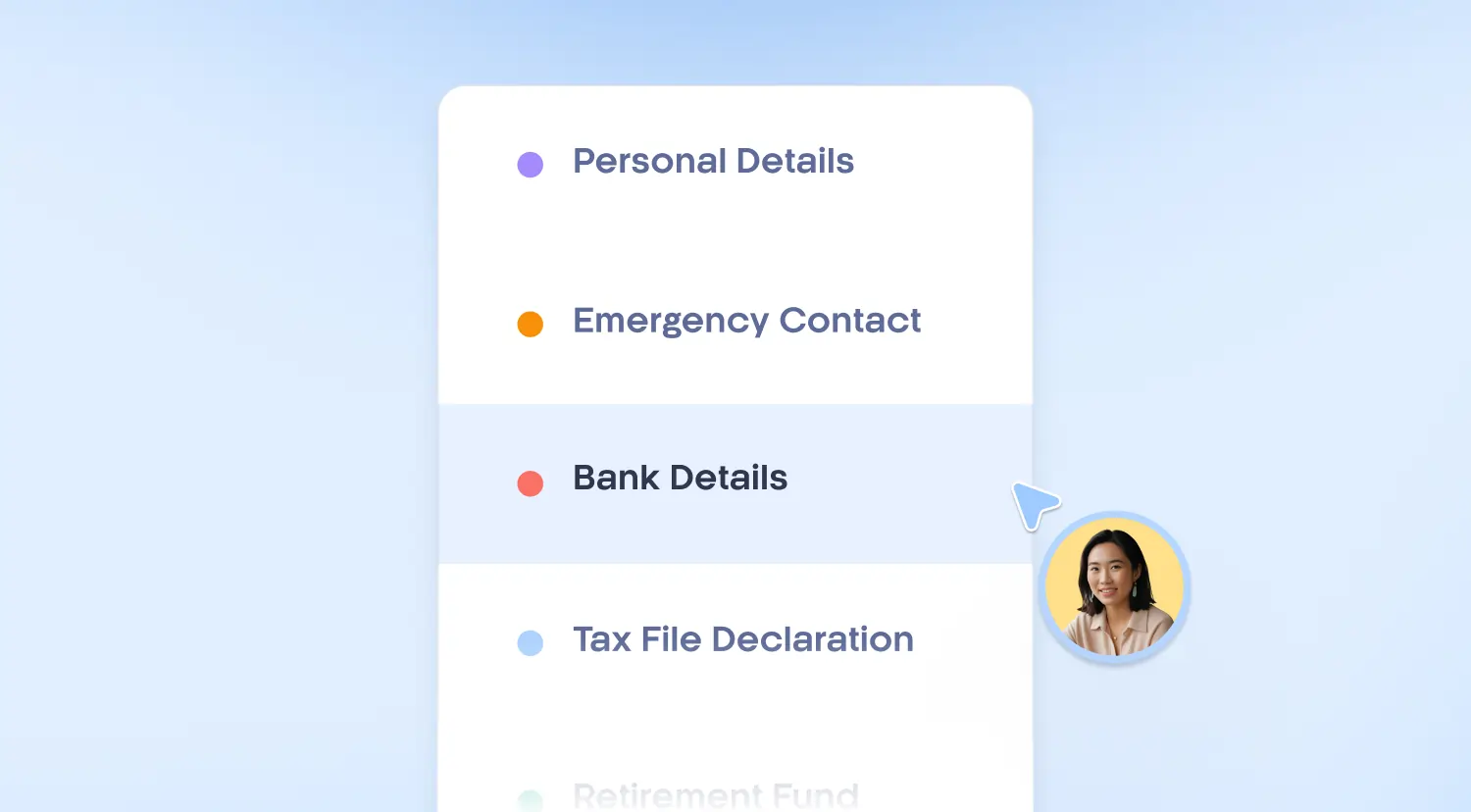
Healthy onboarding goes beyond collecting information. It’s about ensuring the right information is requested from the right worker type, validated before start date, approved by the right people, and passed through to payroll in a usable format.
A casual employee, full-time employee, contractor, shift worker, or award-covered role shouldn’t theoretically follow the same onboarding path – workflows need to reflect the payroll and compliance requirements attached to that role from the outset.
Employment contracts
While not legally mandated to be outlined in writing (though verbal agreements are generally not advised), a signed employment contract is best practice for both managing risk and defining the employment relationship.
- Classification
State clearly whether the employee is Full-Time, Part-Time, or Casual. - Remuneration
Must meet or exceed the relevant award rate or the National Minimum Wage. - Superannuation & Tax
Specify the employee's super fund choice and include the required Pay As You Go (PAYG) tax withholding information.
The practical challenge lies in making sure these requirements aren’t managed through disconnected forms, emails, and spreadsheets. The alternative? Embedding them into the onboarding workflow itself with the right fields, approvals, documents, and checks completed before the employee starts. This is where onboarding technology can become more than an administrative tool. It becomes a control variable for payroll accuracy.
Most, if not all, of the above directly influence payroll accuracy and compliance. Getting this wrong will set the tone for continued payroll errors and non-compliance.
Onboarding quality determines payroll quality
A consistent principle in payroll governance is that systems can only execute what they’re given. They do not – and currently cannot – interpret intent. They also aren’t an advisable replacement for governance (but can certainly expose its absence).
Effectively, this means if onboarding data is incomplete or incorrect, payroll will still crunch the numbers and generate a compromised result, creating a predictable risk pattern:
- Incorrect classification entered at onboarding becomes an ongoing pay error
- Missing allowance eligibility is replicated across multiple pay cycles
- Incorrect bank details become payment exceptions
- Incomplete termination data results in continued payments
In regulated workforce environments – including disability care & support, labour hire, and shift-based industries – these issues are amplified by high staff churn and variable employment conditions.
RELATED: Award Interpretation Explained (How Modern Awards Drive Payroll & Compliance)
Where onboarding and payroll need to connect
If payroll is expected to be accurate, timely, and compliant, then it’s up to you to ensure the conditions that feed it are similarly reliable.
Onboarding is where those very conditions are set.
Not as a procedural step or administrative box to tick off the HR checklist; but as a critical juncture where workforce data either becomes structured enough to support payroll or fragmented enough to undermine it for the duration of the employee lifecycle.
The bottom line is that onboarding cannot afford to sit in isolation from payroll governance.
Classification decisions, contractual terms, award interpretations, and employee data captured at the outset are not static inputs. They serve as reference points for every pay run – from leave and allowances to changes in role, pay, and termination.
When that foundation is inconsistent, payroll inherits the complexity instead of solving it.
This is precisely where an intelligent platform like Xemplo can bridge the gap between workforce processes and payroll.
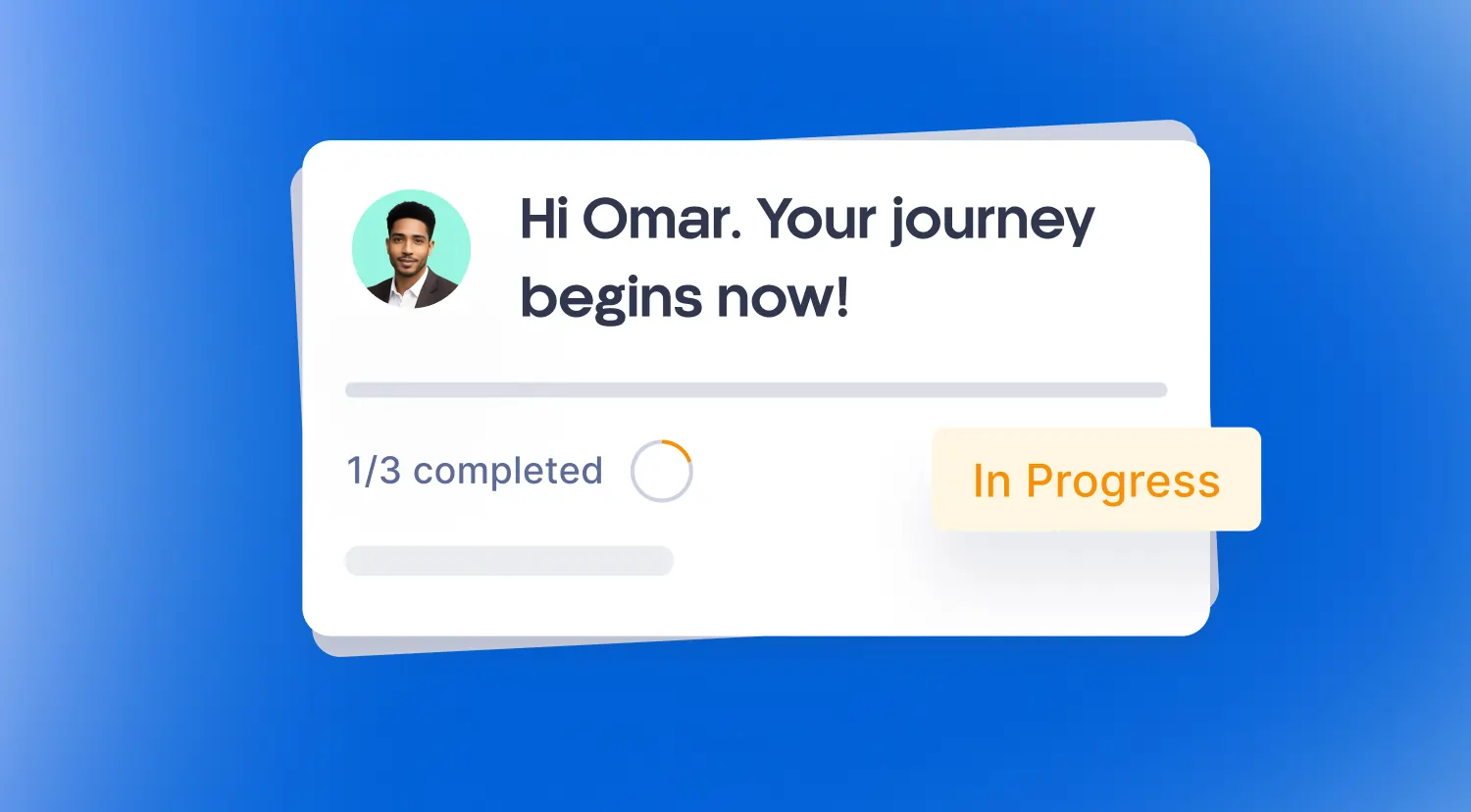
With role-based onboarding journeys, mandatory data capture, document control, compliance validation, and payroll-ready outputs embedded into the workflow, businesses can reduce the amount of manual checking and reinterpretation that payroll teams are usually left to manage.
Different worker types can also follow distinct onboarding sequences rather than a single generic process, with the right information logged and passed through to payroll more consistently.
For payroll teams, that means fewer downstream surprises. For the business, it means a stronger foundation for compliance, visibility, and employee trust from day one.

.webp)