

You’d be forgiven for assuming award interpretation is straightforward.
In theory, hours are worked, base rates are applied, and payroll should act accordingly. Simple, right? Wrong.
With over 120 modern awards encompassing all manners of professions and industries – each with its own collection of legal entitlements and conditions – the practical reality is anything but straightforward.
Here’s what you need to know about award interpretation in Australia.
What is award interpretation (and who’s covered by modern awards)?
Award interpretation is the conversion of modern award provisions into structured payroll logic.
Modern awards sit alongside the National Employment Standards (NES) and provide additional minimum employment entitlements for employees covered by an applicable award. Together, the NES and modern awards establish the minimum standards that apply to employment in Australia.
Interpretation is therefore required to translate these terms and conditions into rules that payroll engines can execute reliably. In operational terms, this governs:
- Award coverage & employee classification
- Ordinary hours & overtime thresholds
- Penalty rate triggers (weekends, evenings, public holidays)
- Allowances, loadings, & minimum engagements
- Interaction rules when multiple entitlements apply to one shift
- Termination (redundancy pay, final / leave payouts)
Where businesses are covered by a registered agreement (e.g. enterprise agreements), modern awards no longer apply. However, the enterprise agreement must provide employees with terms and conditions that leave them better off overall compared to the applicable modern award.
Some senior employees may not be covered by a modern award due to the nature of their role, duties, or the industry in which they work. Where no modern award applies, the employee is considered “award-free” and is generally only covered by the National Employment Standards and their employment contract.
Employees who earn above the Fair Work high-income threshold may also be excluded from award coverage where specific requirements are met, such as having a valid guarantee of annual earnings.
Employees who qualify as award-free are still covered by the NES and must at least be paid the national minimum wage, and any contract or agreement cannot undercut these minimums.
Why structural complexity is baked into modern awards
In short: complexity just comes with the territory.
Australia’s 120+ modern awards – which themselves consolidated thousands of pre-existing awards, and officially came into effect on 1 January 2010 with the Fair Work Act 2009 – are designed for both industry and occupation-specificity.
Not payroll simplicity.
Each award is a conditional framework where pay outcomes change based on context:
- When is the work being performed?
- How are the hours structured?
- What role is being performed?
- How does the award define ordinary time & overtime?
Seemingly negligible contextual alterations can generate multiple simultaneous entitlements – ordinary hours, overtime, penalty rates, and allowances or loadings.
To make matters even more challenging, the legal phrasing can often be broad, sometimes verging on ambiguous. Hence “interpretation.”
“You can put ten payroll and compliance specialists in a room to discuss a single modern award and still end up with differing interpretations,” remarked Sean Donelly, Chief Technology Officer of Xemplo.
“And the unique part about payroll outcomes is that it’s very deterministic. Small interpretation discrepancies can materially change pay results.”
But the complexity doesn’t just lie in the rules themselves. It also comes down to how they interact with one another during the execution stage.
How operational payroll risk develops
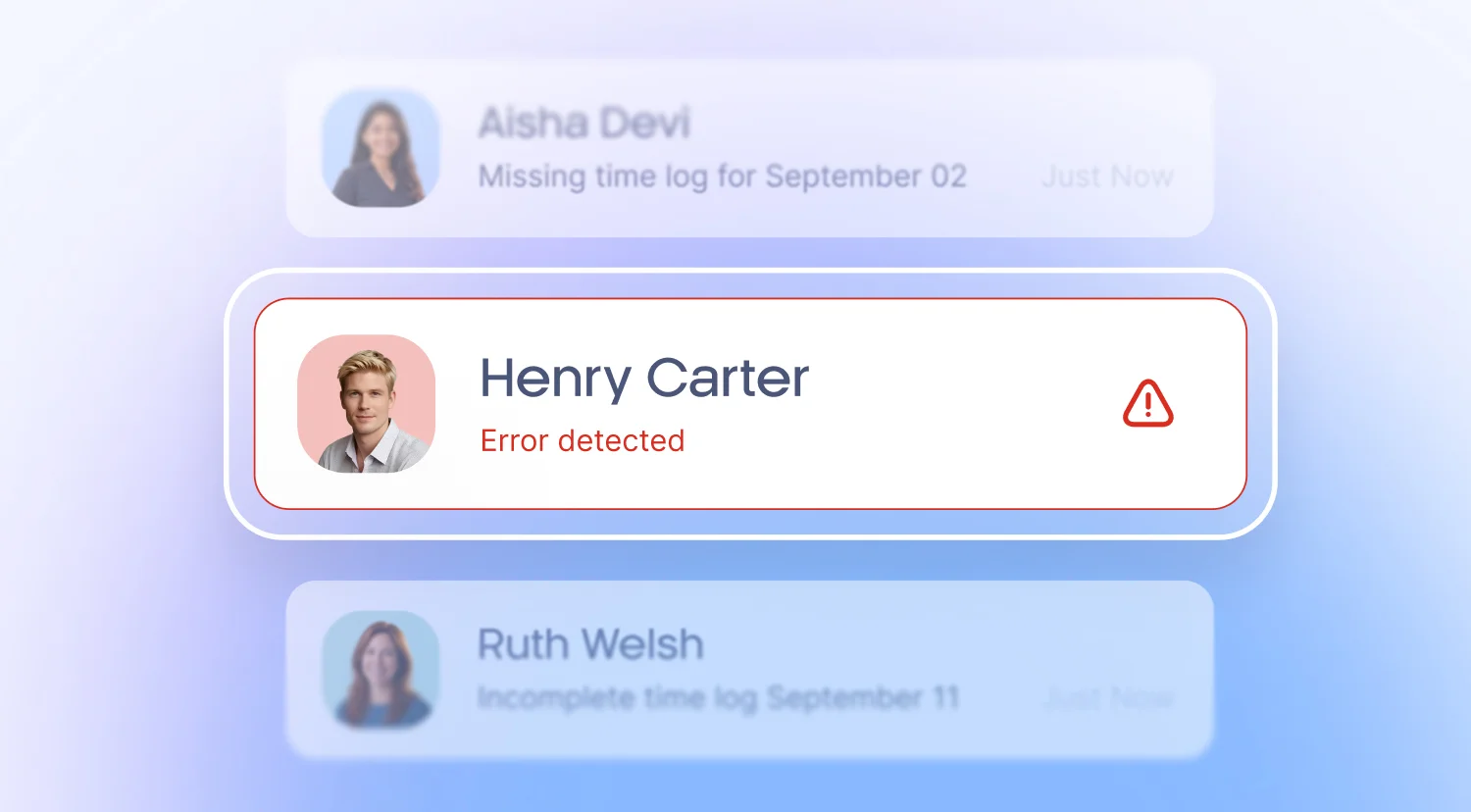
Underpayment isn’t generally a base-rate issue. They’re an award interpretation, configuration, or compliance maintenance issue.
Common failure points among various organisations are as follows:
- Misclassification at onboarding trickling downstream to payroll outcomes
- Incorrect ordinary hours & overtime configuration
- Penalty rates applied inconsistently upon shift boundaries
- Casual loading that interacts incorrectly with overtime or penalties
- Minimum engagement rules not being integrated into rostering
- Broken shift conditions not being consistently applied
- Flat or rolled-up rates failing under edge cases
For the most part, these issues aren’t isolated. They scale quickly across employees and locations, and can cascade into systemic underpayment.
This is also why payroll configuration and award interpretation now carry far greater risk exposure following the introduction of criminal wage theft laws on 1 January 2025.
Where intentional underpayments occur – including breakdowns relating to overtime, penalty rates, or award entitlements – organisations may now face significantly harsher enforcement consequences.
Why payroll issues usually start upstream
The majority of payroll underpayments don’t actually begin with payroll.
They originate much earlier – during onboarding, worker classification, contract setup, rostering, timesheet approvals, perhaps even through disconnected workforce systems feeding inconsistent data downstream into payroll engines.
If an employee is incorrectly classified at onboarding or if roster structures don’t align with award definitions, the platforms you use to process payroll will often continue applying the wrong logic every pay cycle thereafter.
This is why many leading organisations no longer treat payroll as a standalone back-office function.
Instead, they focus on creating unified operational workflows in which onboarding, workforce management, compliance, payroll inputs, as well as payroll execution all operate on a single set of data.
For businesses operating in complex award environments, this upstream visibility has become increasingly important. Particularly as payroll scrutiny and wage compliance obligations continue to intensify here in Australia.
Why award interpretation breaks down
Award interpretation fails because it sits across multiple operational domains that aren’t designed to operate as a single system.
These typically range from legal drafting of award instruments, workforce configuration, rostering & scheduling, to payroll calculation engines, and compliance oversight.
Each layer operates with different structures, timelines, and constraints. Without integration, interpretation becomes fragmented across the organisation rather than consistently applied.
Key structural drivers of breakdown include:
- Legal drafting that is not system-executable
- Frequent award updates and interpretive change
- Variation across industries and classifications
- Reliance on manual interpretation or individual expertise
- Misalignment between HR, workforce, and payroll systems
At scale, this fragmentation becomes untenable.
What does “good” award interpretation look like?
Mature organisations treat award interpretation as a governed system capability rather than a manual activity.
That typically entails:
- Award rules embedded directly into payroll engines
- Consistent classification structures across HR & payroll
- Rostering as per award definitions of time & penalties
- Automated calculation of overtime, penalties, & allowances
- Controlled processes for award updates
- Clear escalation pathways for edge cases
- Transparent logic for how pay outcomes are generated
The defining feature isn’t just accuracy. It’s consistency under real operational pressure.
The risk of leaving interpretation outside systems
It starts as an operational inconvenience. Over time, what begins as a minor operational inconsistency can evolve into a broader payroll and compliance risk.
When award interpretation is being held together by inadequate solutions and practices – and managed through spreadsheets or internal knowledge informally localised to individuals – three risks emerge rather quickly:
- Inconsistent application across teams or sites
- Limited visibility into how pay outcomes are calculated
- High dependency on specific individuals or informal expertise
Most systemic underpayments originate from this disconnect between interpretation and execution.
Why modern award compliance needs systems & oversight
The direction is clear: award interpretation is divorcing itself from manual processes and looking towards embedded operational systems.
Platforms such as Xemplo reflect this by building award logic directly into the workflows responsible for onboarding, workforce management, timesheets, payroll inputs, and payroll execution itself.
The practical effect is less about automation for its own sake, and more about reducing operational ambiguity before it reaches payroll:
- Workforce data is captured consistently from the start
- Classification structures remain aligned between HR & payroll
- Payroll logic is applied consistently across teams & locations
- Overtime, penalties, & allowances are calculated using built-in rules
- Workforce fluctuations are reflected operationally rather than manually reconstructed each pay cycle
Pay outcomes become traceable, auditable, and easier to govern. But technology alone isn’t always enough.
As award environments become increasingly complex (and payroll scrutiny heightens), many organisations are also moving towards managed payroll models that combine software with specialist payroll oversight.
This allows businesses to reduce dependence on internal interpretation, maintain stronger governance processes, and ensure payroll operations keep pace with evolving award requirements.
The combination of technology and managed payroll services ultimately instils a more predictable, controlled, and defensible payroll operation at scale.
How employers need to be positioned in 2026
Award interpretation will always be complex, because modern awards are designed to reflect real working conditions – not simplify them – and real working conditions are (as you will have gathered by now) seldom cut and dry.
The organisations that are progressing fastest are the ones treating this as infrastructure rather than black-letter interpretation work.
Once award rules are properly integrated within workforce management and finance platforms, payroll ceases to be a recurring exercise in reconstruction, and can start becoming a consistent and streamlined output of well-governed data.
That’s where solutions and services like Xemplo and Payroll by Xemplo, respectively, sit within the bigger employment landscape.
Not by removing the complexity of modern awards altogether, but by helping businesses operationalise that complexity through connected workforce ecosystems, inherent payroll logic, and ongoing payroll governance support.
Not by removing the complexity of modern awards in Australia, but by managing that very complexity with automated software that’s stable, predictable, and crucially, compliant every pay cycle.
In practice, modern award compliance is no longer just a payroll exercise. It has steadily become an operational discipline that depends on connected systems, workforce data governance, and ongoing oversight throughout the employment lifecycle.
Effectively, any employer serious about staying ahead needs to build this capability directly into the way their workforce operates – rather than trying to manually reconstruct compliance at the end of each pay cycle.
Also read:
- How To Avoid Unfair Dismissal Claims in Australia (Employer’s Guide)
- How To Prevent Underpayments In Australia
- VEVO & Work Rights Checks in Australia (Employer’s Guide)
- AU Employment Law: What You Need To Know
- NZ Employment Law: What You Need To Know
- UK Employment Law: What You Need To Know
- NDIS Worker Screening Check Guide For Employers
- Where NDIS Providers Are Most Exposed Right Now
- Paid Parental Leave In Australia Gets An Update From July 1
- Australia Minimum Wage Guide
Disclaimer: This article provides general information only and does not constitute legal advice. Employers should seek advice specific to their circumstances and refer to current Fair Work guidance when assessing wage, entitlement, or payroll compliance obligations.