
Recruitment does not end when a candidate accepts your offer. The real outcome is achieved during onboarding – when that person is successfully inducted, compliant, payroll-ready, and able to start work with confidence.
What happens next ultimately determines whether an organisation’s hiring investment translates into:
- A productive and satisfied employee, or
- Administrative friction, future payroll issues, and early employee disengagement
This is the stage where hiring intent becomes employment, candidate data becomes workforce data, and expectations begin to shape the employee experience.
If your post-recruitment onboarding process is fragmented or informal, as with many aspects of workforce management, the consequences rarely stay contained within HR alone.
They surface downstream as compliance gaps, payroll corrections, inconsistent workforce details, and entirely avoidable turnover.
When designed properly, however, both processes and the end product serve as a steady bedrock for the employee lifecycle – and set the scene for business growth.
First impressions matter… for more reasons than one
New employees do not experience onboarding as a concept. They experience it as a sequence of practical interactions that either build confidence or create friction.
Receiving paperwork, completing compliance checks, gaining access to systems, understanding pay arrangements, and knowing what needs to happen before day one – these interactions collectively form a worker’s first meaningful impression of the organisation (the recruitment process is more akin to window shopping).
Where processes are clear, connected, concise, and as seamless as possible, onboarding signals stability, ranging from “these people know what they’re doing” and “I’ve joined a well-oiled machine” to “I can see myself building a career here.”
Where steps are unclear, duplicated, or difficult to complete, onboarding can quickly signal disorganisation. Even when the underlying intent is sound.
A well-structured, post-recruitment onboarding process therefore carries more weight than administrative efficiency. It’s an expectation for how work is managed, how information flows, along with an indication of how reliable internal systems will likely be.
Clean data capture is everything
Perhaps the most overlooked pillar of healthy onboarding is data integrity.
Information collected at the beginning – identity, tax declarations, superannuation, bank accounts, compliance credentials, and role-specific requirements – dictates the outcome of every subsequent workforce system.
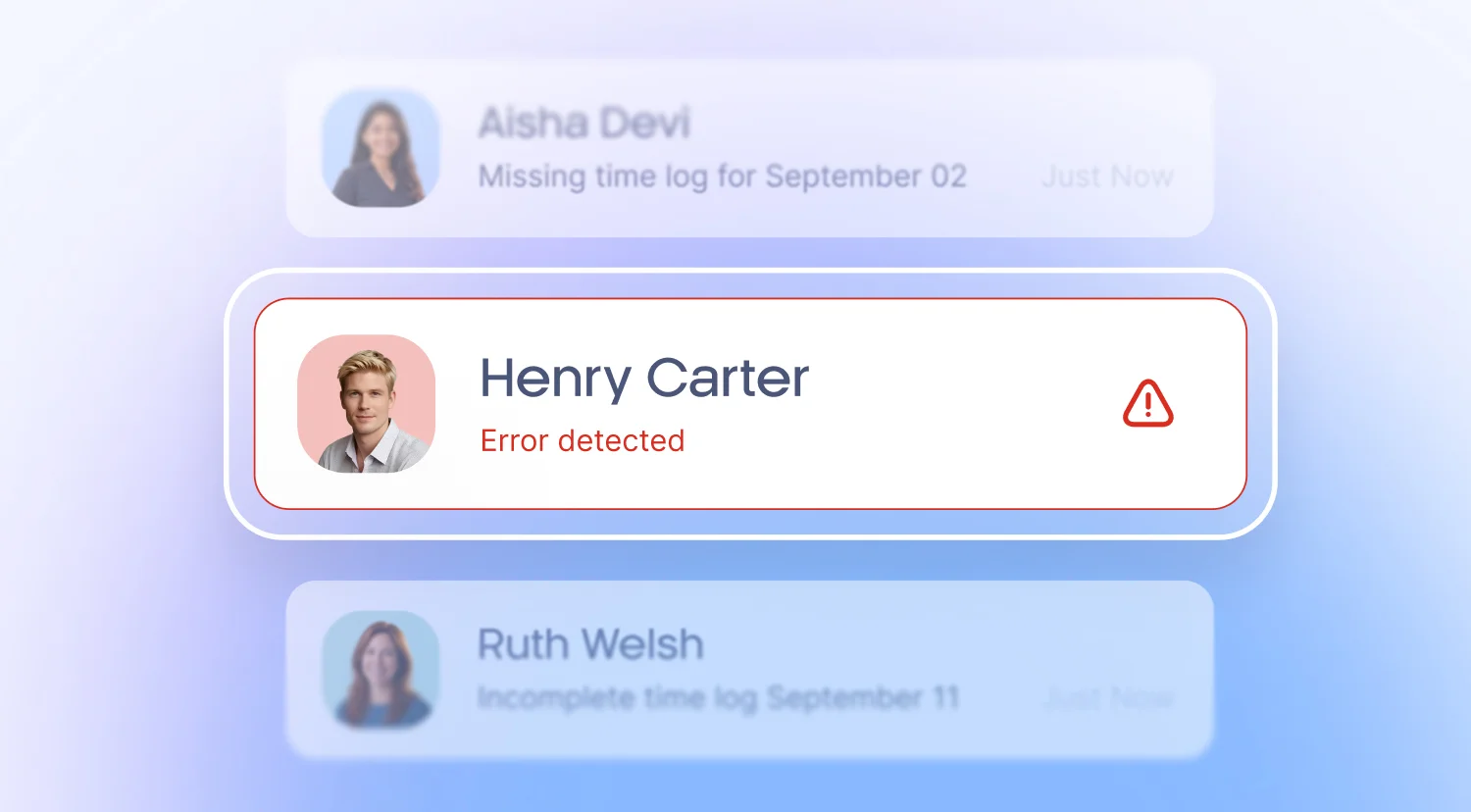
When this data is captured inconsistently or manually re-entered across multiple systems and spreadsheets, you expand the surface area for potential errors. The type of errors that (as previously mentioned) return as payroll discrepancies, incorrect entitlements, failed compliance checks, and even delays in rostering and deployment.
A formalised, post-recruitment onboarding workflow, supported by Xemplo, helps reduce this risk by ensuring that:
- Data is captured once at the source
- Fields are validated at the point of entry
- Systems are integrated so information flows downstream without re-keying
- Updates are traceable & auditable
In regulated or award-heavy environments, this goes beyond being operationally helpful. It’s a safeguard against financial and compliance exposure.
Today’s onboarding quality is tomorrow’s payroll
While often viewed as a separate function, payroll is essentially the final evolution of upstream data.
In other words, if the quality of onboarding data is subpar, the payroll team will be forced to absorb that impact through manual adjustments, correction cycles, and exception handling.
One might assume it’s “somebody else’s problem,” though these issues cascade and compound over time.
A small error during post-recruitment onboarding – such as an incorrect classification, missing credential, mismatched employment condition – can flow through to payroll and breed recurring issues across multiple pay cycles.
Over time, these issues become a larger operational burden, requiring manual corrections, exception handling and repeated follow-up between HR, payroll and managers.
That is why platforms like Xemplo connect onboarding, compliance, and payroll-ready data into a single workflow. By validating key information before employees are activated, businesses can reduce manual rework and improve the quality of downstream payroll processes.
The result is a cleaner operational handover, with fewer corrections required after onboarding is complete.
Embedded compliance
In many industries – particularly the tightly regulated sectors such as NDIS /care services, labour hire, or security services – compliance requirements are extensive and time-sensitive.
These may include (but aren’t limited to) right-to-work verification, background checks, role-specific licences, and completion of mandatory training.
When onboarding is approached as a loose collection of separate yet related tasks, compliance naturally falls back on reactivity, increasing the likelihood of missed checks or expired credentials going unnoticed.
A structured, post-recruitment onboarding workflow bakes compliance into the process.
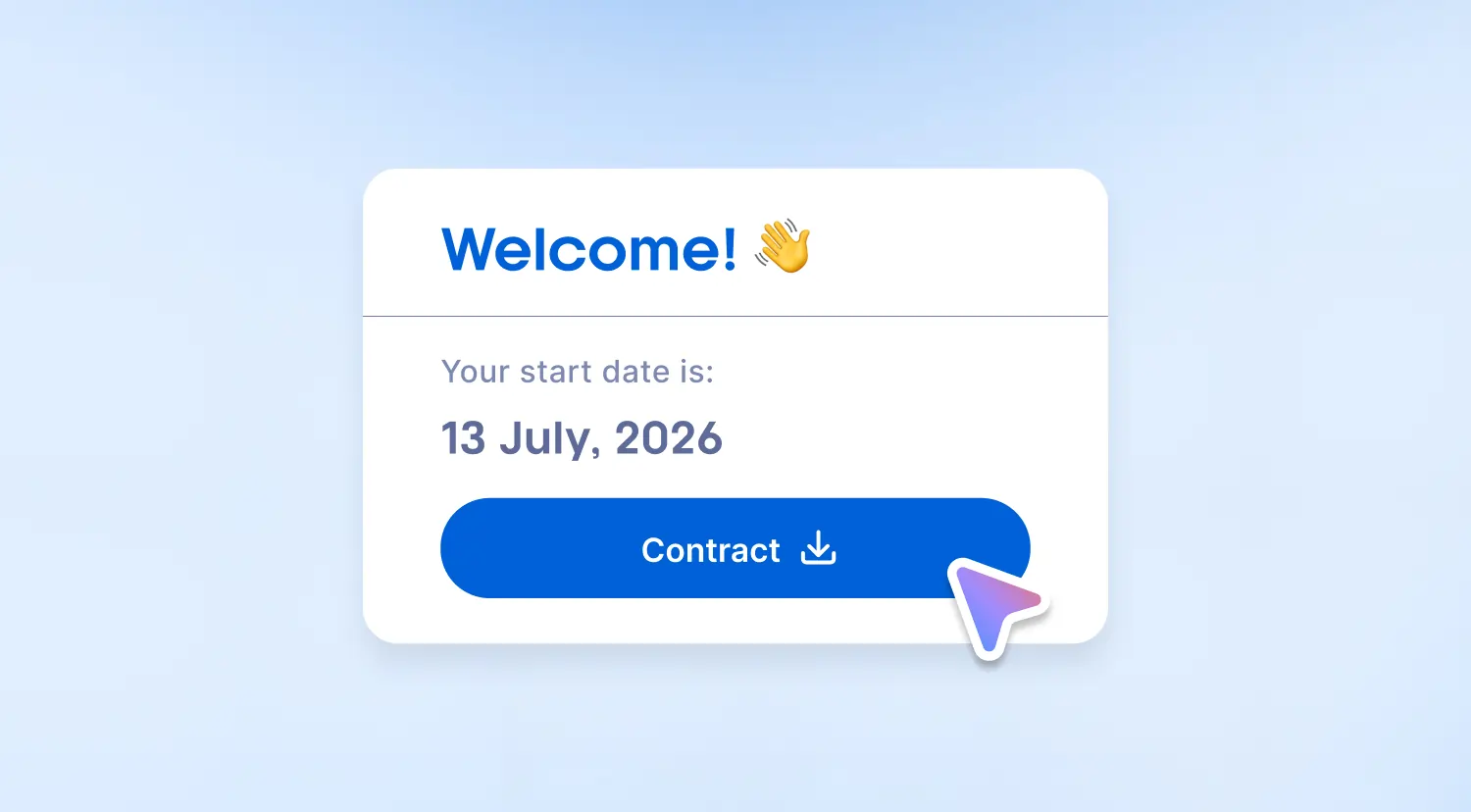
Within this paradigm – as demonstrated by the Xemplo onboarding journey – requirements aren’t optional steps; they’re conditions for deployment. This methodology supports:
- Consistent enforcement of regulatory obligations
- Defensible audit trails for external review
- Reduced reliance on individual memory or manual tracking
- Continuous visibility of workforce readiness
Compliance can then shift from a periodic admin exercise to an ongoing system function supported by automated license, credential, and training management.
Secured retention vs early attrition
Early employee attrition is frequently linked to the onboarding experience. Even when exit reasons are officially framed as something else.
A lack of clarity around role expectations, delays in system access, indeterminate payroll timing, and repeated requests for information (left largely unanswered)… all this contributes to uncertainty in the early stages of employment.
A structured, post-recruitment onboarding process cuts this uncertainty at the root by providing:
- Predictable sequencing of tasks
- Confirmation of completion at each stage
- Timely access to tools and systems
- Confidence around pay & scheduling arrangements
These aren’t broad assumptions, either. Stability in the first days and weeks of employment is usually a stronger predictor of retention than pre-employment engagement.
According to Cypher Learning, companies with formal onboarding programs report employee retention increases of up to 82% with productivity gains exceeding 70%.
Engaging in comprehensive onboarding also leads to employees being 69% more likely to stay for a minimum of three years.
Proof, meet pudding.
Procedures are more dependable than people
In workforce management, consistency depends on process. When onboarding relies too heavily on individual managers, quality can vary significantly across teams, locations, and roles.
Strong onboarding depends on repeatable processes, clear ownership, and systems that guide each step from offer acceptance through to workforce activation.
When onboarding is informal, managers serve as the de facto coordination point for tasks that should be system-driven, e.g. chasing documentation, verifying compliance status, resolving payroll queries, and coordinating system access.
This distributed workload seeds variety. And not the welcome kind.
As much as we’d like to believe otherwise, people can’t always be perfect (hence “human error”). Some managers are highly diligent, while others may rely on informal or inconsistent processes.
That’s how you end up with uneven onboarding quality across the organisation.
Formalised workflows remove this dependency from the equation by defining:
- Who is responsible for each onboarding step
- What constitutes completion
- When escalation is required
- How status is tracked and communicated
Managers can then focus on helping new employees succeed in their roles, rather than managing avoidable administration.
You can’t scale without standardising
Organisations don’t remain static in size or structure.
As workforce volume increases, inadequate onboarding processes tend to break. What may work for a small team often becomes difficult to manage as workforce volume, locations, and compliance requirements increase.
Standardised post-recruitment onboarding workflows prime you for scalability by ensuring that:
- Each hire follows a determined process regardless of location or manager
- Compliance requirements are applied uniformly
- System integrations handle volume without proportional increases in manual effort
- Exceptions are visible & manageable rather than embedded in routine operations
The alternative? Growth introducing fragmentation where it should be introducing efficiency.
Auditability, accountability, and security
In environments subject to stringent external regulation or internal audit requirements, onboarding records form a critical part of the organisation’s evidentiary framework.
It’s not enough to know that a process exists; following said process to a tee must also be demonstrable. The real question is whether the business can show that the right steps were followed, at the right time, by the right people.
Post-recruitment onboarding systems like the one featured in Xemplo establish auditability by design, recording:
- When each step was completed
- Who completed or approved it
- What data was submitted and when
- Whether compliance conditions were met prior to activation
Instead of relying on manually kept records or after-the-fact reconstruction, onboarding can provide businesses with a clearer, more reliable record of what happened and when.
Yet another neglected pillar of onboarding is system access control.
Employees typically require access to payroll portals, rostering systems, client information, or internal tools from their first day. If onboarding and IT provisioning aren’t aligned, access is delayed or granted prematurely without appropriate controls.
In any case, both options carry risk.
A better post-recruitment onboarding process ideally ensures that access is:
- Granted based on role & verified employment status
- Revoked or adjusted automatically when employment conditions change
- Consistent with compliance & privacy obligations
Such an alignment between employment status and system access is non-negotiable if you wish to maintain operational security.
Onboarding for business growth
Businesses hire to grow. But growth depends on more than recruitment activity alone. It depends on whether each new hire can move from offer acceptance to compliant, productive work (without unnecessary friction).
When onboarding is intentionally engineered as an outcome of recruitment rather than a separate administrative phase, it becomes part of a continuous system: from candidate acceptance and compliance checks through to payroll activation and ongoing workforce management.
In that context, onboarding isn’t simply about welcoming new employees. It’s about converting your organisation’s hiring decisions into accurate data, compliant employment, and stable operations.
The most effective onboarding processes do more than reduce paperwork. They set the conditions under which the workforce can function predictably, scale cleanly, and remain auditable over time.
This is where Xemplo strengthens the synergy between recruitment, onboarding, compliance, and payroll readiness.
With role-based onboarding journeys, mandatory data capture, document control, compliance validation, and payroll-ready outputs embedded into the workflow, our solution enables businesses to onboard people consistently, reduce risk, and lay a stronger foundation for workforce growth.
For the new employee, it creates a smoother transition and greater confidence from day one.
For the business, it creates a basis for compliance, visibility, and employee trust.