
.webp)
I’ve never been particularly fond of the phrase “employee lifecycle.” Though I understand the appeal.
It sounds neat, doesn’t it? Someone joins an organisation, they’re onboarded, they’re developed, perhaps promoted or moved into another role – and then eventually, they leave.
Circle of life. Cue the Disney soundtrack. A nice and predictable sequence that lends itself rather conveniently to nice and predictable workflows.
The problem is that employment doesn’t really work that way anymore.
People move between roles, take extended leave and return, become contractors and later employees again, switch locations or responsibilities; sometimes, they suddenly find that a qualification, licence, or working arrangement has altered what they can do.
Even within a single employment relationship, what an organisation needs from a worker can change drastically from one week to the next.
So why are we still designing workforce technology around assumptions of straight lines?
Employment isn’t a strictly linear journey
The traditional employee lifecycle assumes that everyone moves through broadly the same stages in roughly the same order. But workforce activity is far more fluid than that.
Different people will invariably trigger different requirements at different stages.
A worker might finish onboarding on Monday, update a licence six months later, update their availability the following week, complete mandatory training the month after that, take leave, trade roles, and then ask for a completely different set of policies or credentials.
None of those events necessarily follows a predetermined schedule – nor does every worker need to experience every event.
That matters because technology built around fixed sequences tends to strongarm workforces into conformity, rather than allowing the software to respond to what’s actually happening.
From prescribed workflows to adaptive engagement
I think the next generation of workforce technology needs a different model. I’d call it Adaptive Engagement.
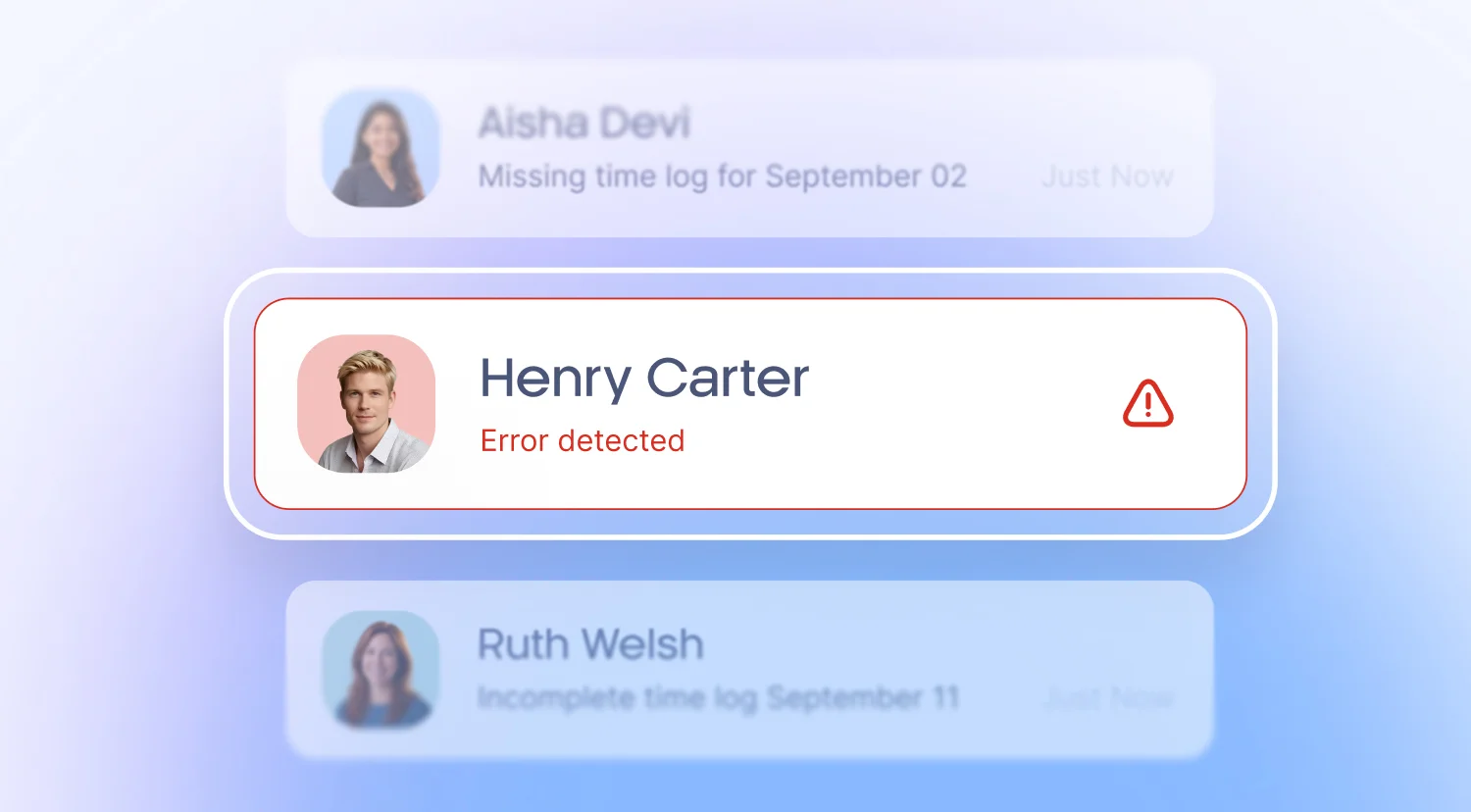
The idea is relatively straightforward. Instead of pushing every worker through a predetermined pipeline of activities, the system dynamically responds to the shifting conditions of their employment:
- An employee submits a new request that triggers the relevant workflow
- An employee’s role changes, and the system recognises that different obligations now apply
- When a credential approaches expiry, the appropriate action is initiated
- When a manager requests a change, the relevant people are instantly looped into the process.
The system isn’t asking, “What stage of the lifecycle is this person at?” It’s asking, “What’s shifted – and what needs to happen because of it?”
That’s a much closer reflection of how employment actually works.
Now this doesn’t mean anything goes…
There’s an important qualification here. Adaptive doesn’t mean unstructured.
Countless situations call for sequential activity and priorities, particularly where legislation, workplace policy, or black-letter compliance dictate what must happen and when (i.e. highly regulated sectors such as NDIS care and security services).
Those controls obviously still need to be enforced.
If a particular check must happen before someone can perform a role, the system should know that. If a document needs approval, the appropriate authorisations should be built into the process. And if a worker’s role changes and that creates new compliance requirements, those requirements should be triggered accordingly.
The difference is that the system should enforce sequences that really matter, rather than imposing sequences under the tyranny of rigid software design.
Related: The Payroll Game Is Changing (Just Not How You Think)
Systems should respond to workers (not the other way around)
This is where I think workforce technology is heading.
Historically, we’ve asked employees to fit themselves into software-defined processes. They log in, find the relevant workflow, complete the prescribed steps, and move on.
An adaptive model reverses that relationship. The system recognises changes in a worker’s engagement and responds with the relevant activity, whether that entails:
- Requesting information
- Prompting an approval
- Initiating a compliance requirement
- Updating a record, or
- Surfacing something that demands human attention/intervention
The employee doesn’t need to understand the architecture behind the process. They simply need the right action at the right time, while HR doesn’t need to manually orchestrate every step.
AI has a role here, but it isn’t the whole story
There’s been plenty of discussion regarding how the looming spectre of AI will impact workforce technology (a conversation we’ve contributed to), and I do think there’s a genuine opportunity here.
I am, however, less interested in AI for its own sake than I am in what happens when you embed expertise into the workflow itself.
Imagine years of workforce management knowledge, regulatory understanding, and practical experience available within the system at the moment someone needs it.
Instead of asking a manager to determine what they need to do when a worker’s circumstances change, software automatically identifies the relevant obligations to guide next steps.
That’s where AI becomes useful.
Bringing expertise closer to the decision, rather than making people search for it somewhere else.
How Xemplo is leading the charge
This is also influencing how we think about the architecture of Xemplo.
Our workforce technology needs to move beyond obstinate, sequential processes and towards dynamic workflows that respond to what’s actually happening across the workforce.
Employee participation should be able to trigger the next action rather than tick off another stage in a predefined journey, while compliance requirements can be applied whenever they become relevant.
It also means managers can respond to change as they occur, rather than waiting for the next scheduled process; and workforce information can remain useful because the system is reacting to events in real-time rather than relying on external intervention.
The measure of a good workforce system
As a seasoned product manager, I wholeheartedly believe we’re going to look back at the idea of the “employee lifecycle” in the same way we look at other neat organisational models that were useful until the world stopped behaving neatly.
Like I said, employment is no longer adequately represented by a straight line. These days, it’s more akin to a collection of relationships, changes, requests, responsibilities, and events that unfold in heterogeneous fashion for a heterogeneous workforce – and our technology should reflect that.
The future of workforce management isn’t about moving every worker through the same sequence more efficiently. It’s about recognising what’s happening, understanding what it means, and responding appropriately.
That’s the promise of Adaptive Engagement: less prescription, more responsiveness; less forced processes, more technology tailored to the way people actually work.